author
Publish Date / Update Date

Customize Hugo LoveIt Theme Pagination: Previous/Next Controls and Page Jump

Hugo LoveIt comes with a built-in Pagination feature that allows users to navigate between different pages using page numbers on the homepage. This prevents all posts from being displayed on a single page and can also help improve the website’s loading speed.

The original pagination navigation is primarily based on page numbers, which is generally sufficient for everyday browsing. However, as the website’s content gradually grows and the number of pages increases, it becomes impractical to display every page number in the navigation bar. Relying solely on page numbers can therefore make navigation somewhat inconvenient.

For this reason, I decided to make a small modification to LoveIt’s pagination navigation. While keeping the original page-number navigation, I added Previous Page, Next Page, and page number jump functionality, making pagination more convenient and complete.

[Test] Website Network Connection Speed Test

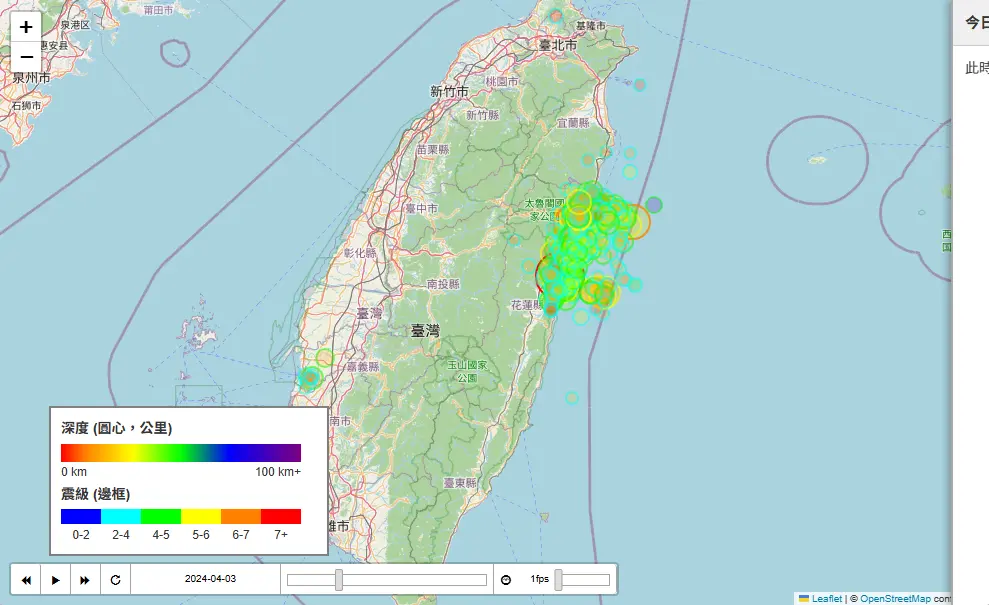
Cover image was generated by ChatGPT.

Tip
This speed test is powered by Netlify Functions. Test results may be affected by server load, network routing, CDN nodes, and current network conditions. This test is intended only to evaluate the network connection quality between this website and the user’s device. It is not intended to measure the user’s actual Internet bandwidth, ISP-provided plan speed, or connection speed to other websites. Results are for reference only and may differ from the actual network speed.

Spatiotemporal Prediction of Unknown Areas Based on Structured State Space Diffusion and Resolution Adaptive Fixed Rank Kriging

Abstract

With the rapid advancement of sensing and remote sensing technologies, data collected in transportation, meteorology, and environmental monitoring have become increasingly characterized by high-frequency observations and cross-regional spatiotemporal dependencies. However, missing observations, irregular sampling, and prediction at unobserved locations remain major challenges for spatiotemporal forecasting. To address these issues, this study proposes a spatiotemporal forecasting framework, $\text{SSSD}^{\text{S4+MRTS}}$ + AFRK, which integrates Structured State Space Diffusion Model with S4 Layers ($\text{SSSD}^{\text{S4}}$) and Multi-Resolution Thin-Plate Spline (MRTS) basis functions to jointly model long-range temporal dependencies and spatial structural patterns. MRTS is incorporated into the S4 layers as additional spatial conditioning information, enabling $\text{SSSD}^{\text{S4+MRTS}}$ to learn spatiotemporal dynamics conditioned on observed locations. During inference, the framework further integrates MRTS-based Resolution Adaptive Fixed Rank Kriging (AFRK), which preserves the spatial consistency of the predicted field while enabling interpolation at unobserved locations. Experiments conducted on the Weather2K, MERRA-2, and the dataset from The Second Competition on Spatial Statistics for Large Datasets are used to compare the proposed framework with Temporal Fusion Transformers (TFT), Vector Autoregression (VAR), Stochastic Variational Gaussian Process (SVGP), and Spatio-temporal DeepKriging (STDK). The results demonstrate that $\text{SSSD}^{\text{S4+MRTS}}$ generally improves Mean Squared Prediction Error (MSPE) under most experimental settings, with particularly notable gains in future forecasting at unobserved locations. Overall, the findings indicate that integrating temporal dynamic modeling with spatial statistical methods effectively enhances spatiotemporal forecasting performance under missing-data and spatial extrapolation scenarios.

Keywords: Structured State Space Diffusion Model, Multi-Resolution Thin-Plate Spline Basis Functions, Resolution Adaptive Fixed Rank Kriging, spatiotemporal forecasting, spatial interpolation, missing data imputation


CNN Image Recognition Experiment

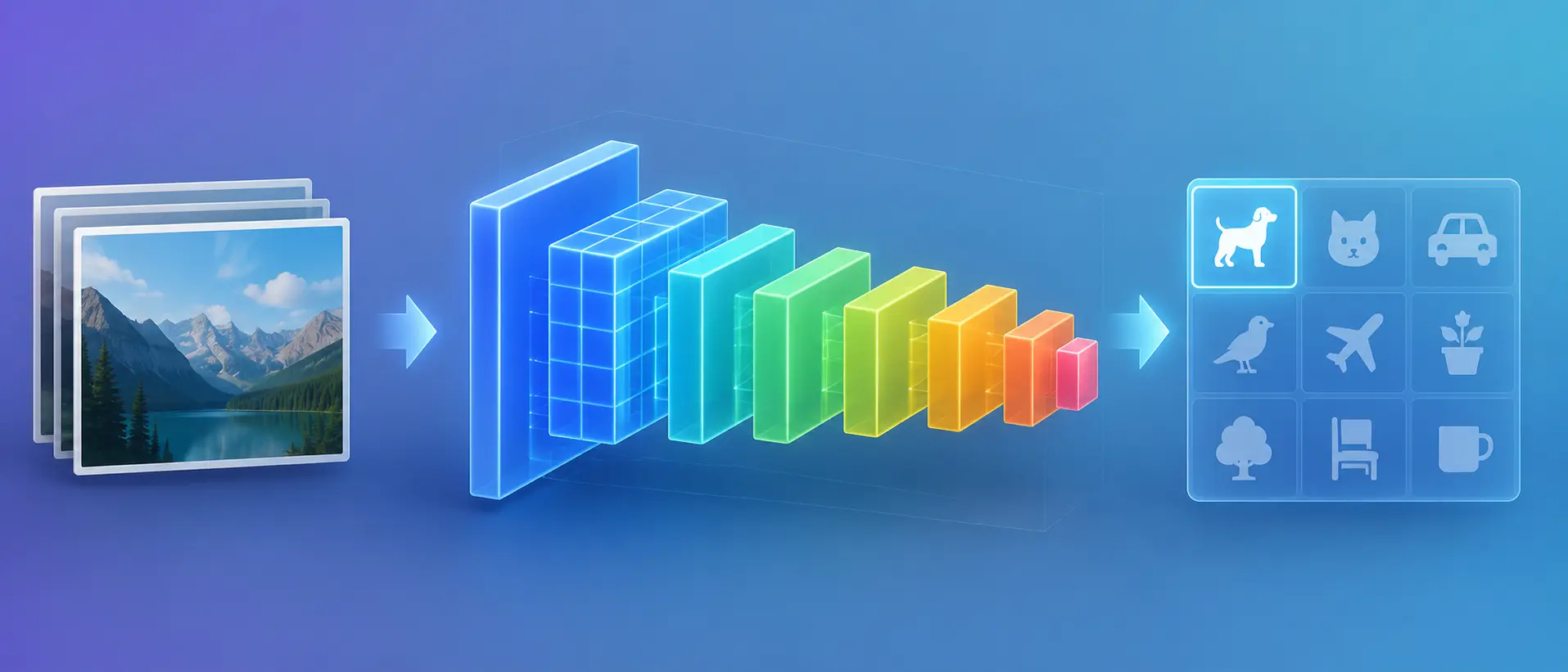
The cover image was generated by ChatGPT.

Tip
This project was written in August 2023. The following content primarily documents my initial experience learning and experimenting with deep learning at that time. As such, some explanations and viewpoints have been preserved to reflect my understanding during that period.

The year 2023 marked the rapid rise of generative artificial intelligence. From large language models to a wide range of AI-powered applications, artificial intelligence gradually became part of everyday life, making deep learning one of the most prominent and widely discussed technologies of the year.

For me, 2023 also marked the beginning of my journey into the world of deep learning, as I built and experimented with my first deep learning models.

Historical Typhoon Data Download for Taiwan

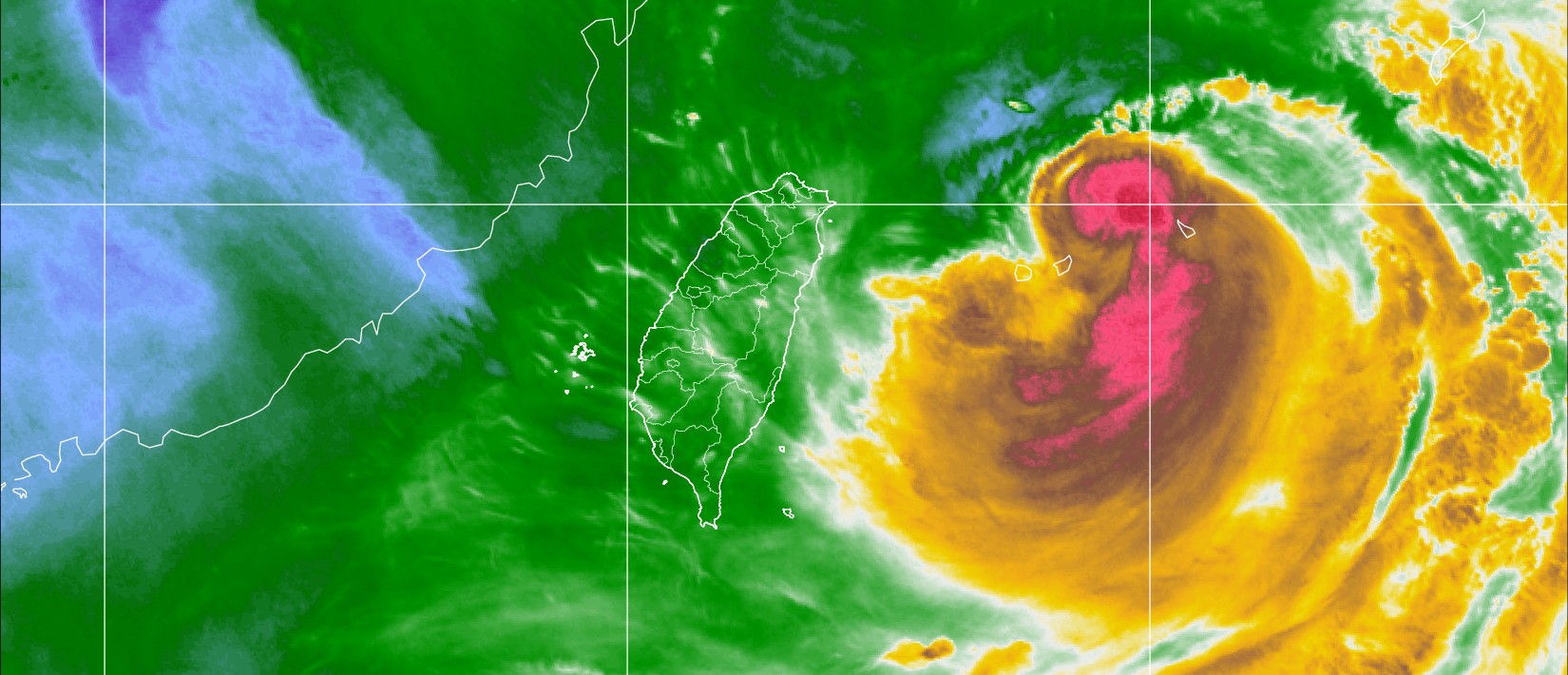
The cover image is a downloaded typhoon satellite image. It is a satellite water vapor cloud image produced by the Central Weather Administration (CWA) using CCU/SSL. The image was captured at 07:10 on July 11, 2026, and was obtained from the Weather Image Archive of the Department of Atmospheric Sciences at Chinese Culture University (Atmospheric Science Research and Application Databank).

This is a small program that was originally written to download typhoon satellite images and related data. Its initial purpose was to collect image data for image recognition research. Since the program was developed at an earlier stage, it still contains several relatively immature implementation approaches. Therefore, this article serves only as a record and reference for the data download process, and does not provide an in-depth discussion of the program architecture or optimization methods. The programming language used in this project is Python.