Sampling Methods

Cover image generated by ChatGPT.
Why do we need sampling? What are the benefits for data analysis? When building models, we sometimes find that the amount of data required for training is too large, which prolongs the training time. The purpose of sampling is to select a representative finite sample from a large population and perform statistical analysis on it, thereby inferring the characteristics or properties of the overall population.
From this, we can see that a sample is a subset of the population. Sampling methods refer to how we reasonably select a subset of the population as a sample. Since the sample size is smaller than the population, we hope that the sample statistics calculated from the selected sample approximate the population statistics, minimizing the bias introduced by sampling.

Sample Quality
Sample quality is influenced by the following factors:
- Sample size
- Sampling method
Too few samples may lack representativeness and fail to reflect population characteristics, while an inappropriate sampling method may miss important data points, overlooking population features.
According to the Central Limit Theorem (CLT), when the sample size is sufficiently large, the sample mean $\overline{X}$ approximates a normal distribution:
$$ \overline{X} \sim N(\mu, \sigma^2) $$
where $\mu$ is the population mean and $\sigma^2$ is the population variance. Usually, when the sample size $n$ exceeds 30, the sample mean distribution approximates normality, and the sample variance is
$$ \sigma^2_{\overline{X}} = \frac{\sigma^2}{n} $$
Simple Random Sampling
Simple random sampling is the most common method, where each individual has an equal chance of being selected.
The selection process is independent, and each draw does not affect the others.
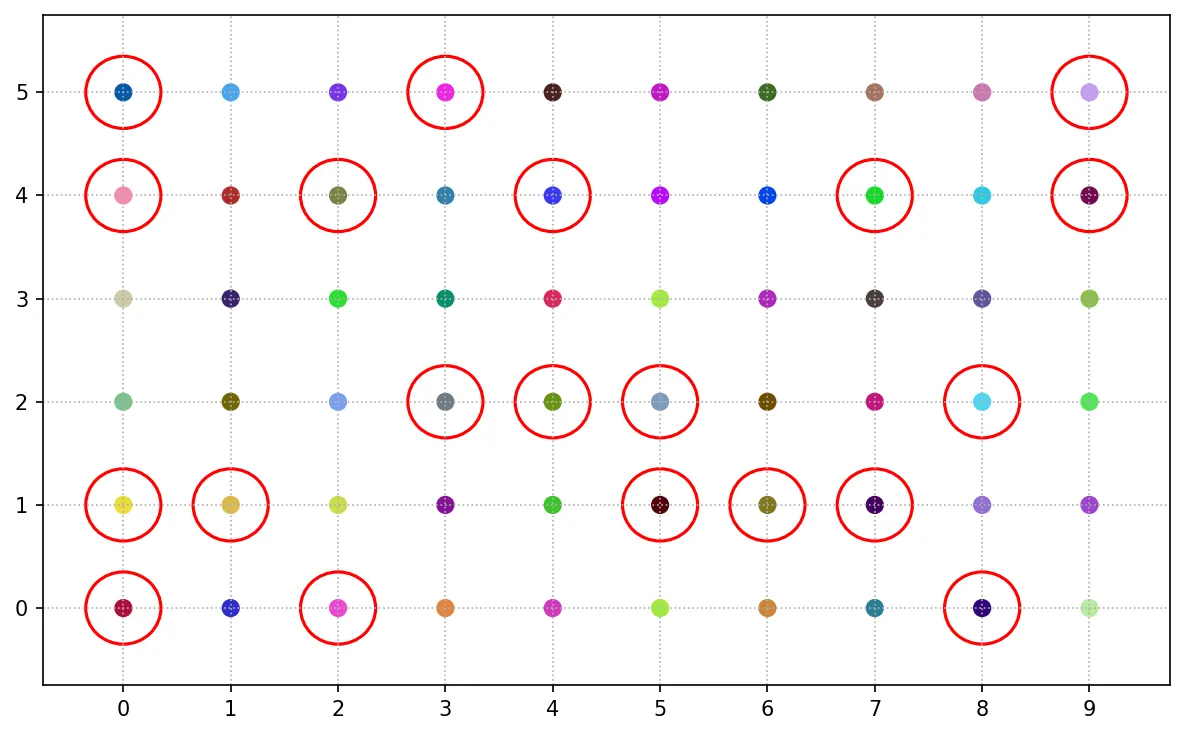
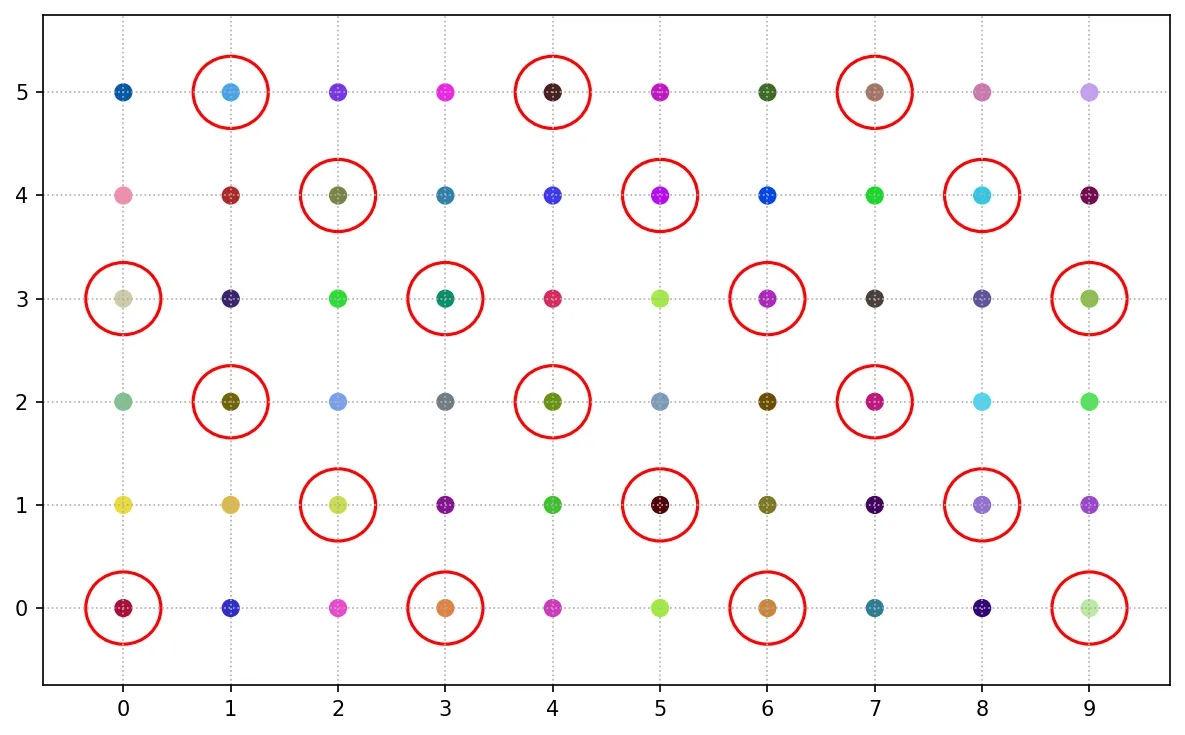
Systematic Sampling
Systematic sampling selects samples from the population at regular intervals. Its principle is to start from a random individual and select subsequent samples at a fixed interval.
One-Stage Cluster Sampling
In one-stage cluster sampling, the population is pre-grouped. The principle is to divide the population into multiple clusters that are homogeneous between clusters but heterogeneous within clusters, and then randomly select clusters. All individuals in the selected clusters become samples.
Each row below represents one cluster, with a total of six clusters.
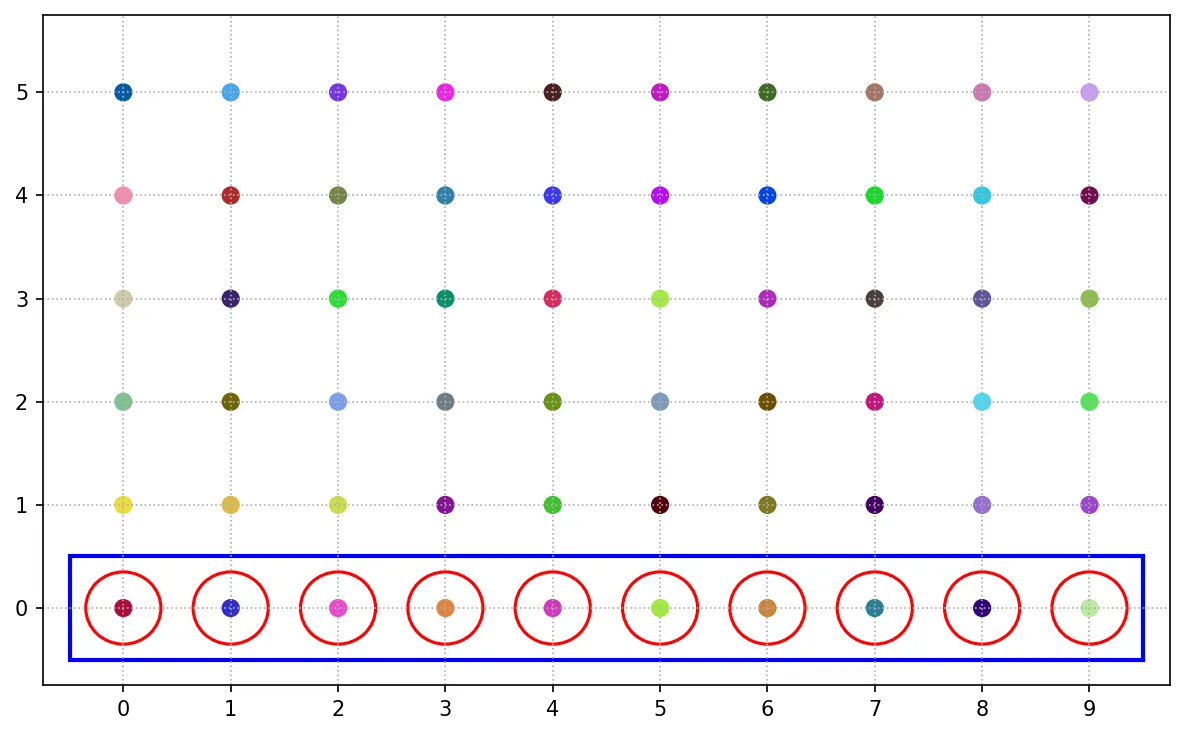
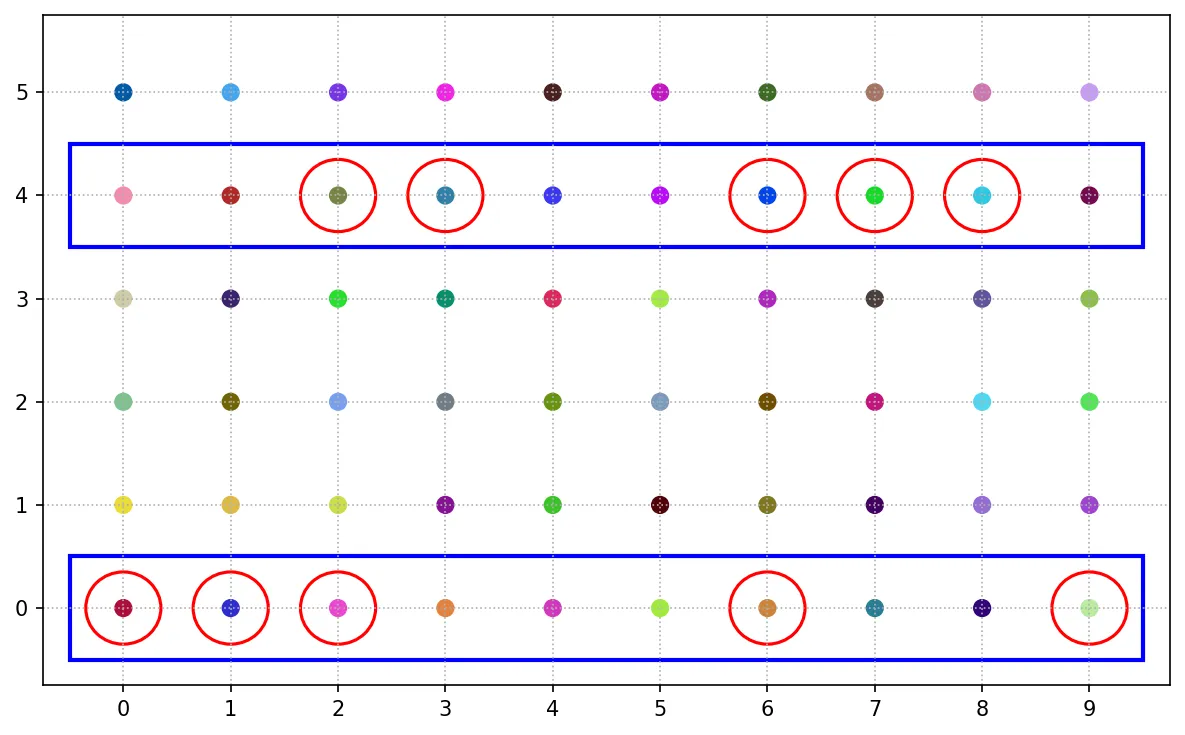
Two-Stage Cluster Sampling
Two-stage cluster sampling is similar to one-stage cluster sampling, but in two-stage sampling, a simple random sample is further drawn within the selected clusters.
Clusters may be selected multiple times to form the sample group.
Stratified Random Sampling
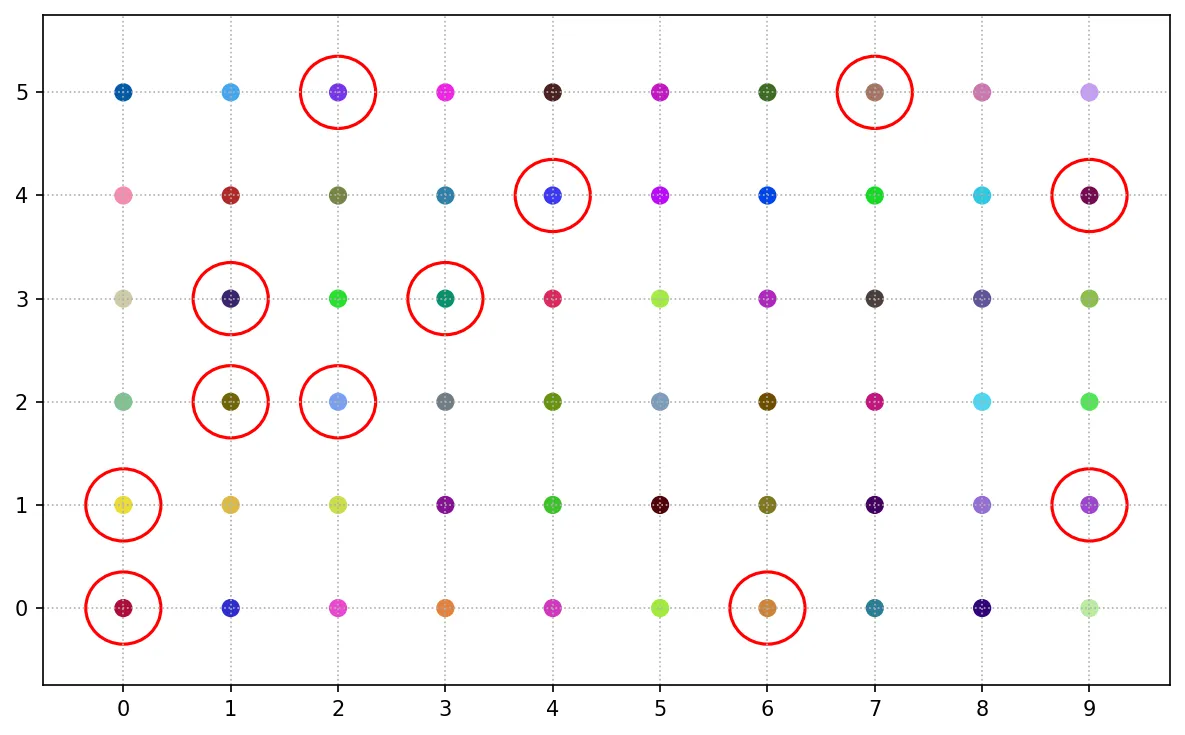
In stratified random sampling, the population is divided into multiple heterogeneous subgroups, and simple random sampling is conducted within each subgroup based on proportion or number. It is often used when comparing different groups, such as single-parent households vs. intact families.
Below, the rows are divided into 6 groups numbered 0 to 5, and 2 individuals are sampled from each row.
Convenience Sampling
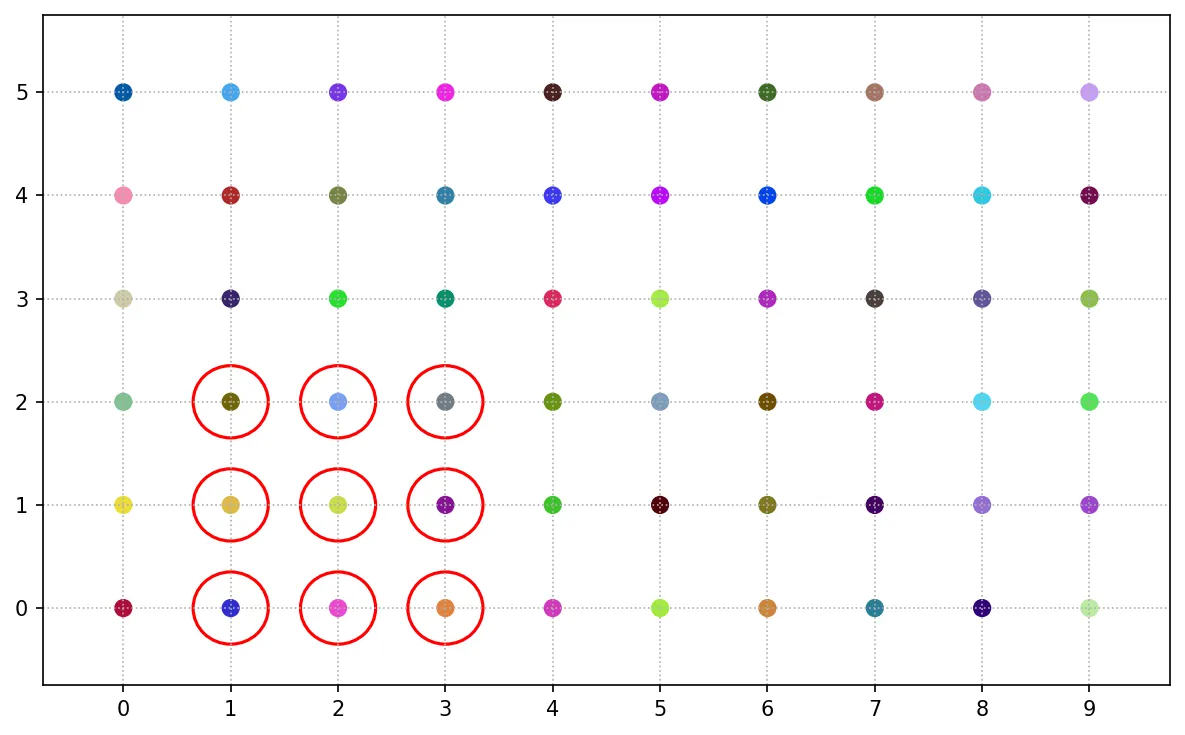
Convenience sampling is for research convenience, where samples are selected based on what is easiest and quickest for the researcher. The error between the sample and the population may be large.
For example, researchers might choose the first 9 completed responses in a survey for simplicity.
Judgment Sampling
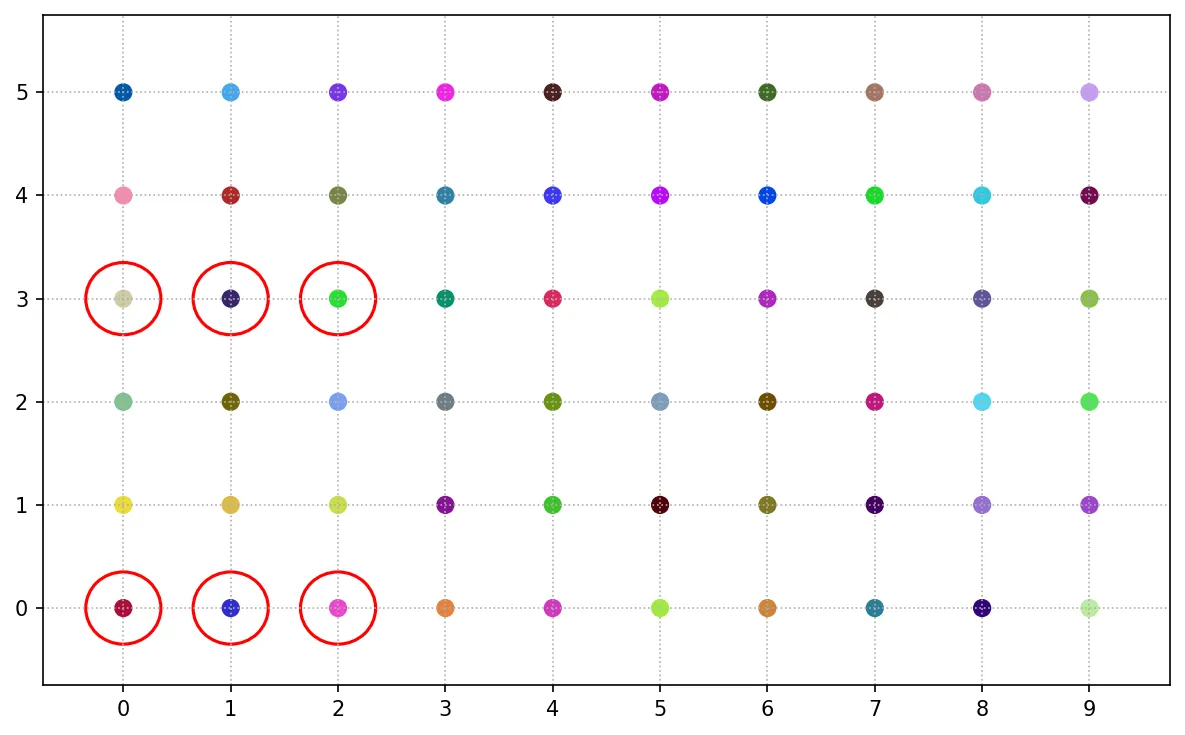
Judgment sampling selects samples based on the researcher’s professional judgment or experience. The selection is subjective.
Referral Sampling
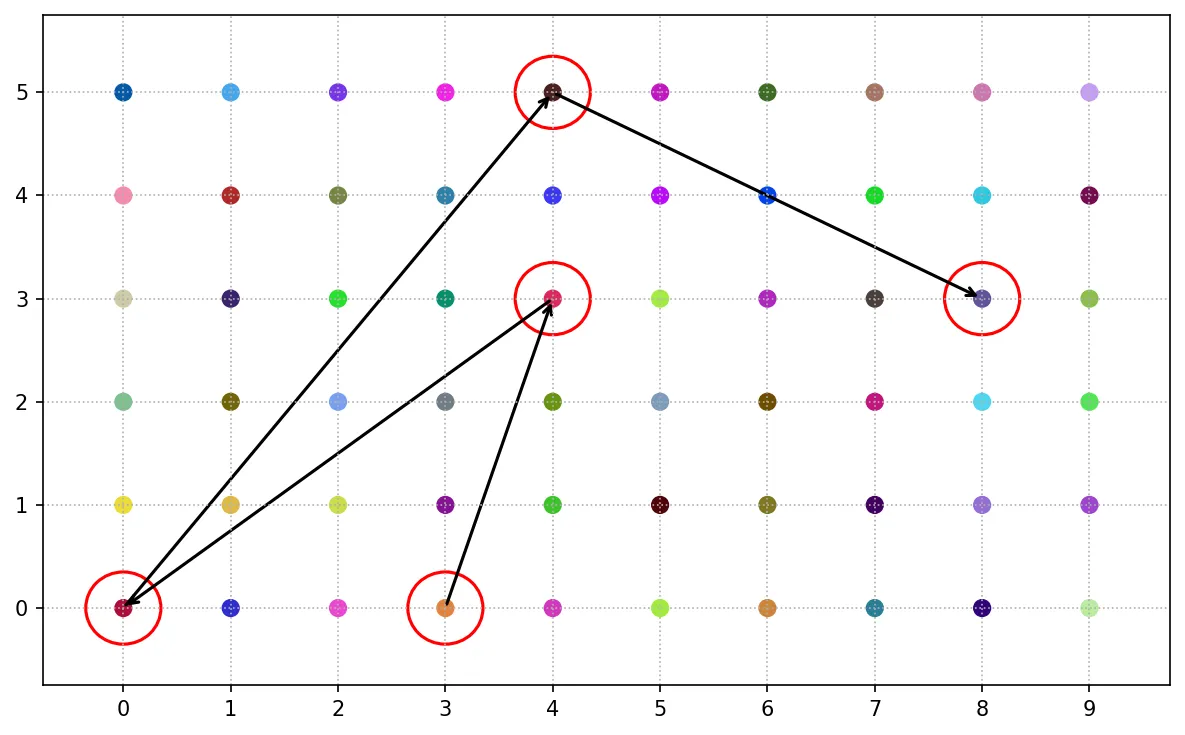
Referral sampling, also called snowball sampling, selects samples by starting with one individual and then including related individuals as samples, repeating the process.
This method is often used in social network analysis, special populations, or industry-specific surveys.
Quota Sampling
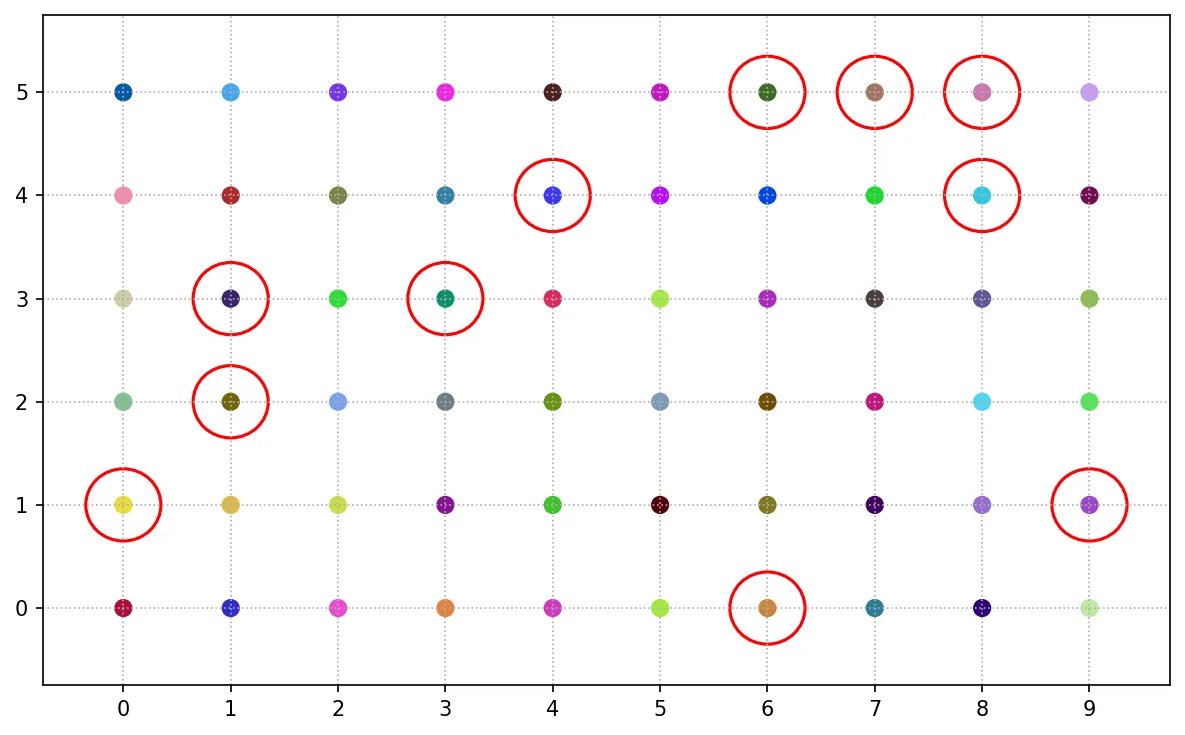
Quota sampling is similar to stratified random sampling. The population is divided into heterogeneous subgroups, and a fixed number of individuals is selected from each subgroup based on judgment or convenience. It mainly aims to select representative or convenient individuals.
Below, the rows are divided into 6 groups numbered 0 to 5, and up to 4 samples are selected from each row based on judgment.
Conclusion
Sampling methods are fundamental knowledge for researchers conducting studies, modeling, and data analysis. For small populations, the entire population is usually used. When the population is large, sampling becomes essential. Sampling is also commonly used to divide data into multiple training and testing sets for validation and testing.
These sampling methods can be divided into two main categories: Probability Sampling and Non-Probability Sampling:
Probability Sampling
Each individual has a quantifiable and non-zero chance of being selected.
- Simple random sampling
- Systematic sampling
- Stratified sampling
- Cluster sampling
Non-Probability Sampling
Selection chance is hard to quantify and depends on researcher judgment or convenience.
- Convenience sampling
- Judgment sampling
- Referral sampling
- Quota sampling
Choosing an appropriate sampling method improves representativeness, reduces bias, and makes research results more reliable.
Further Learning
- The ipynb file used in this article.
References
吳明隆. (2010). 抽樣方法. 論文寫作與量化研究 (2nd ed., p.78–88). Taipei: Wu-Nan Book Inc.
母體 (統計學). (2025, July 14). Wikipedia, the free encyclopedia. Retrieved July 15, 2025 from https://zh.wikipedia.org/wiki/总体

Related Posts